

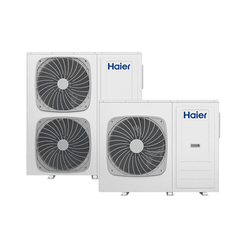

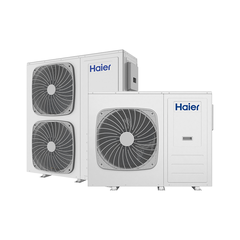
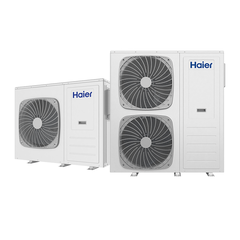
In the context of the current global energy transition, the European heat pump market is showing a booming trend.
I. Working principle and advantages of heat pumps
Heat pumps are efficient heat transfer devices. By consuming a certain amount of electrical energy, they absorb heat from low-temperature heat sources (such as air, water, or soil) and then raise it to a higher temperature for heating, hot water supply, or other heat demands. Compared with traditional heating methods, heat pumps have significant advantages.
First of all, high energy efficiency is its prominent feature. Heat pumps can utilize free heat energy in the environment. Their coefficient of performance (COP) is usually high, and they can provide a large amount of heat energy while consuming less electrical energy, thereby reducing energy consumption and operating costs.
Secondly, it is highly environmentally friendly. During operation, heat pumps do not produce combustion products and do not emit pollutants such as carbon dioxide and nitrogen oxides. They are friendly to the environment and help reduce greenhouse gas emissions and address climate change.
In addition, heat pumps are flexible and multifunctional. It can simultaneously meet the needs of heating, cooling, and hot water supply, and is suitable for various building types, including residential, commercial, and industrial buildings.
II. Development status of the European heat pump market
In recent years, the European heat pump market has grown rapidly. This is mainly due to the following factors:
Policy support
European governments have introduced incentive policies to promote the application of heat pumps. For example, they provide subsidies and tax incentives to reduce the installation cost of heat pumps and formulate strict building energy efficiency standards to prompt developers and owners to choose more efficient heating and cooling solutions.
Rising energy prices
With traditional energy prices continuously increasing, consumers' demand for energy-saving equipment is increasing. Heat pumps, as an efficient energy solution, can help users reduce energy costs and, therefore, attract increasing attention.
Increased environmental awareness
Europeans' environmental awareness is constantly increasing, and the demand for clean energy is also growing. Heat pumps are an environmentally friendly heating and cooling technology that meets people's pursuit of a sustainable lifestyle.
Technological progress
Heat pump technology is constantly advancing and product performance is continuously improving. New types of heat pumps have higher energy efficiency ratios, quieter operation, smaller sizes, and more convenient installation methods, further promoting the development of the market.
III. Main types of heat pumps in Europe
In the European market, there are mainly three types of heat pumps: air source heat pumps, ground source heat pumps, and water source heat pumps.
Air source heat pump
Air source heat pumps are the most common type and absorb heat from the air. They are easy to install and suitable for various climatic conditions, but their performance may be affected to some extent in extremely cold climates.
Ground source heat pump
Ground source heat pumps utilize the stable temperature of underground soil or water sources to provide heat energy. They have a high energy efficiency ratio and stable operation, but the installation cost is high and a large installation space is required.
Water source heat pump
Water source heat pumps extract heat from surface water or groundwater. It also has a high energy efficiency ratio, but a reliable water source supply is required.
IV. Future development trends
Looking ahead, the European heat pump market is expected to continue to grow rapidly.
On the one hand, with the continuous progress of technology, the performance of heat pumps will be further improved and the cost will be further reduced. At the same time, the application of intelligent technology will make heat pumps operate more conveniently and efficiently.
On the other hand, policy support will continue to increase. European governments will continue to introduce more incentive measures to encourage the installation and use of heat pumps to achieve energy transition and emission reduction goals.
In conclusion, the European heat pump market has huge development potential. With the continuous progress of technology and policy support, heat pumps will play an increasingly important role in Europe's energy transition.