

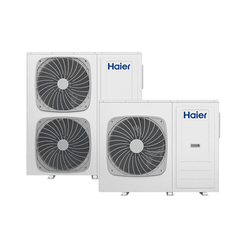

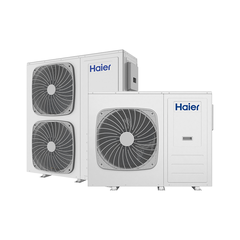
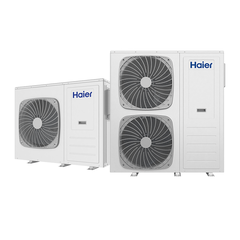
As the global focus on environmental protection and energy efficiency intensifies, R290 (propane), a new type of eco-friendly refrigerant, is gaining increasing attention in the heat pump industry. This article will provide a detailed introduction to the characteristics, application fields, technical advantages, market dynamics, safety and standards, and environmental benefits of R290, aiming to offer comprehensive industry knowledge to readers both within and outside the industry.
Characteristics of R290 Refrigerant
R290, with the chemical formula C3H8, is a hydrocarbon refrigerant known for its low Global Warming Potential (GWP) and zero Ozone Depletion Potential (ODP). It has a low boiling point of -42°C, a density of 493 kg/m³ at 25°C, and a critical temperature of 96.7°C. Due to its flammability, R290 is classified as an A3 refrigerant, requiring special safety measures.
Application Fields of R290 Heat Pumps
R290 is applied across various sectors due to its excellent thermodynamic performance and eco-friendly nature:
Residential Air Conditioning: R290 air conditioners are becoming increasingly popular in the market with their high energy efficiency and environmental friendliness.
Heat Pump Water Heaters: R290 offers a more environmentally friendly heating solution in the water heater sector.
Heat Pump Dryers: R290 dryers are gaining a foothold in the market with their efficiency and eco-friendliness.
Commercial Refrigeration: R290 provides a new cooling option in supermarkets and commercial refrigeration.
Industrial Refrigeration Systems: R290 also shows potential in industrial refrigeration systems.
Technical Advantages of R290 Heat Pumps
R290 heat pump systems are becoming the new focus of the industry with their superior energy efficiency and environmental characteristics:
Energy Efficiency: The thermodynamic properties of R290 enable higher energy efficiency in heat pump systems.
Environmental Friendliness: R290 has a GWP of only 3, significantly lower than traditional refrigerants, with minimal environmental impact.
Versatility: R290 is suitable for residential and commercial heat pump systems under various climate conditions.
Market Dynamics of R290 Heat Pumps
The market demand for R290 heat pump systems is growing:
The production of split R290 air conditioners has reached 500,000 units.
The ice-making machine product sector has almost entirely transitioned to R290 refrigerant, with an annual production of about 1.5 million units.
The annual production of R290 heat pump dryers has reached 3 million units.
Companies like Midea have launched R290 split air conditioners in the European market and have installed hundreds of thousands of R290 air conditioners in India and China.
Safety and Standards of R290 Heat Pumps
The safe use of R290 is crucial due to its flammability:
Leak detection systems and adequate ventilation are required.
Technicians need proper training to ensure safe operation.
The IEC standard for the charge limit of flammable refrigerants has been relaxed, allowing companies to increase the maximum charge to 988g through safety measures.
Environmental Benefits of R290 Heat Pumps
R290, as an eco-friendly refrigerant, is gaining attention in the air conditioning and heat pump sector:
The Chinese government has pledged to achieve zero growth in carbon dioxide by 2030 and zero emissions by 2060.
With an ODP of 0 and a GWP of 20, R29