

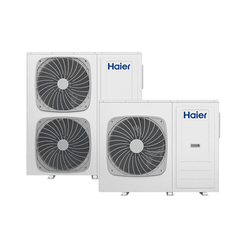

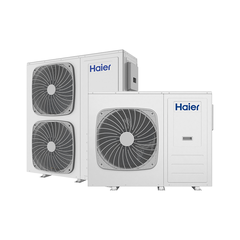
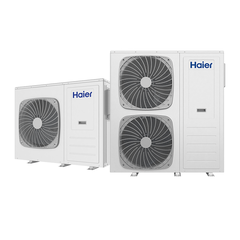
Water flows from high places to low places, and heat is transferred from high-temperature objects to low-temperature objects. This is a natural law. However, in real life, for agricultural irrigation, domestic water needs, etc., people use water pumps to send water from low places to high places. Similarly, in today's increasingly tense world of energy, in order to recover heat from low-temperature hot air that is usually discharged into the atmosphere, low-temperature hot water that is discharged into rivers, etc., heat pumps are used to transfer heat energy from low-temperature objects to high-temperature objects, and then high-temperature Object to heat water or heating, so that the heat can be fully utilized. The working principle of a heat pump system is the same as that of a refrigeration system. To understand how a heat pump works, you must first understand how a refrigeration system works. Refrigeration system (compression refrigeration) generally consists of four parts: compressor, condenser, throttle valve, and evaporator. Its working process is: low-temperature and low-pressure liquid refrigerant (such as Freon) first absorbs heat from a high-temperature heat source (such as normal temperature air) in the evaporator (such as an air conditioner indoor unit) and vaporizes into low-pressure steam. The refrigerant gas is then compressed into high-temperature and high-pressure vapor in the compressor. The high-temperature and high-pressure gas is cooled and condensed into a high-pressure liquid by a low-temperature heat source (such as cooling water) in the condenser. Then it is throttled into low-temperature and low-pressure liquid refrigerant through throttling elements (capillary tubes, thermal expansion valves, electronic expansion valves, etc.). This completes a refrigeration cycle. The performance of heat pumps is generally evaluated by the cooling coefficient (COP coefficient of performance). The refrigeration coefficient is defined as the ratio of heat transferred from a low-temperature object to a high-temperature object and the required power. Usually the refrigeration coefficient of a heat pump is about 3-4, that is to say, the heat pump can transfer 3 to 4 times the heat energy required by itself from a low-temperature object to a high-temperature object. Therefore, the heat pump is essentially a heat-raising device. When working, it consumes a small amount of electrical energy, but it can extract 4-7 times the electrical energy from the environmental medium (water, air, soil, etc.) to increase the temperature for utilization. This is why heat pumps save energy. Europe, the United States and Japan are competing to develop new heat pumps. It is reported that the cooling coefficient of new heat pumps can be 6 to 8. If this value can be popularized, it means that energy will be used more efficiently. The popularity of heat pumps will also increase dramatically. Ground source heat pump is a type of heat pump. It is an air-conditioning technology that uses the earth or water as a cold and heat source to keep buildings warm in winter and cool in summer. Ground source heat pumps only "transfer" energy between the earth and indoors. Use minimal electricity to maintain the required indoor temperature. In winter, 1 kilowatt of electricity sends 4-5 kilowatts of heat from the soil or water source into the room. In the summer, the process is reversed, and the heat in the room is transferred to the soil or water by the heat pump, allowing the room to get cooler air. The energy gained underground will be utilized during the winter. This goes on and on, integrating the architectural space with nature. The most comfortable living environment is obtained at the minimum cost.