

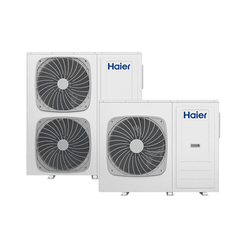

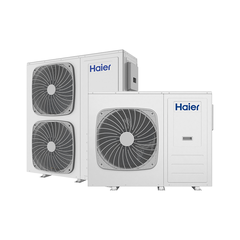
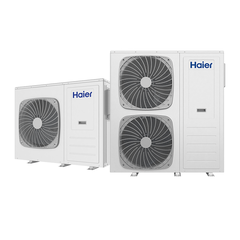
As the global energy crisis intensifies and environmental pollution issues become increasingly severe, finding an efficient, environmentally friendly, and energy-saving way of utilizing energy has become a pressing priority. Air source heat pumps, as an emerging energy technology, are gradually becoming an important alternative to traditional energy sources due to their unique advantages and broad application potential.
How Air Source Heat Pumps Work
The working principle of air source heat pumps is based on the reverse Carnot cycle. They consume a portion of mechanical work (such as electrical energy) to transfer heat from the air along with the electrical energy to a high-temperature environment. Specifically, the heat pump system compresses the low-temperature, low-pressure refrigerant gas into a high-temperature, high-pressure gas using a compressor. It then releases heat through a condenser, transferring heat to water or air that needs to be heated. Finally, the refrigerant passes through an expansion device to reduce pressure and temperature, returning to the evaporator to continue absorbing heat from the air, completing a cycle.
Technical Advantages
High Efficiency: Air source heat pumps operate solely on electrical energy, without the need for any additional fuel, significantly reducing energy consumption. According to data, using air-source heat pumps can save about 75% of energy consumption, greatly reducing operating costs.
Green and Energy-Saving: The air source heat pump system does not emit harmful gases and has no adverse effects on the environment. Moreover, this technology can also reduce the emission of greenhouse gases such as CO2, effectively alleviating environmental pollution.
Safety: The air conditioning system is a closed loop, designed and produced by professionals, ensuring the safety of air energy. Additionally, this heating method is unrelated to combustion processes, eliminating the dangers of fire and toxic gases, making it a safe and reliable heating method.
Adaptability: The air source heat pump system can adapt to various climates and environmental needs. Whether in the cold winter or the hot summer, air source heat pump systems can provide the required heat for users.
Market Applications
Air source heat pumps are widely used in heating, hot water, and drying applications. Especially in the heating market, air source heat pumps, with their high efficiency and energy-saving characteristics, have become an important alternative to traditional heating methods. Furthermore, as consumer awareness of energy-saving and environmentally friendly technologies increases, the hot water and drying markets are also gradually becoming important application areas for air-source heat pumps.
Technological Developments
The air source heat pump industry is continuously making technological breakthroughs, such as the application of high-efficiency compressors and intelligent control systems, which have improved the energy efficiency and performance of the products. These technological innovations provide strong support for the development of the air source heat pump industry.
Industry Reports
According to the "2024-2030 China Air Source Heat Pump Technology Industry Market Competition Status and Future Trend Forecast Report" released by CIConsulting, the air source heat pump industry in China is showing a steady growth trend, with the sales scale of air source heat pumps reaching 30.3 billion yuan in 2023, a year-on-year increase of 13.2%. The report also points out that with the enhancement of environmental awareness and the transformation of energy structures, air source heat pumps, as an efficient, energy-saving, and environmentally friendly heating and cooling equipment, have a huge development space in the industry.