

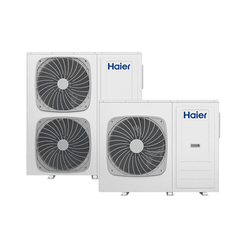

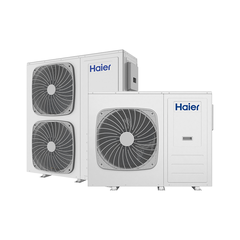
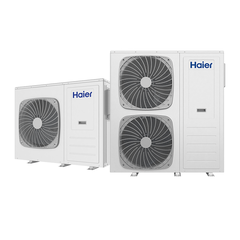
The working principle of air source heat pumps is based on the reverse Carnot cycle, which involves the compression system to absorb heat from the air to produce hot water. The specific process is as follows:
Low-pressure gaseous refrigerant enters the compressor, where it is compressed into a high-temperature, high-pressure gas.
The high-boiling-point refrigerant enters the condenser and begins to liquefy, releasing heat in the process and becoming a liquid.
Before entering the evaporator, the refrigerant passes through an expansion valve (throttle valve), which reduces the pressure of the refrigerant.
The pressure-reduced refrigerant starts to evaporate in the evaporator, absorbing heat in the process and becoming a low-pressure gas again.
It then re-enters the compressor, and the entire refrigerant cycle system is formed in this way.
Industry Status and Development Trends
Market Application: Air source heat pumps are widely used in heating, hot water, drying, and other fields. Especially in the heating market, air source heat pumps have become an important alternative to traditional heating methods due to their high efficiency and energy-saving characteristics.
Technological Innovation: In response to market competition and changing consumer demands, air source heat pump companies will continue to increase R&D investment, focusing on breakthroughs and innovations in core technologies, improving product performance and reliability, while reducing costs and expanding market applications.
Green and Low-Carbon: With policy guidance and market demand, green and low-carbon will become an important direction for the development of the air source heat pump industry. Companies will focus on developing more environmentally friendly and energy-efficient products, promoting the entire industry chain towards low-carbon and recycling development.
Diversified Market Demand: As consumer demands become more diversified and personalized, air source heat pump products will continue to innovate to meet market demands. Application scenarios will continue to expand, from residential homes to commercial buildings, from single heating to combined heating and cooling, and to integrated applications with other renewable energies such as solar and geothermal energy.
Technical Advantages
High Efficiency and Energy Saving: The thermal efficiency of air source heat pumps is much higher than that of traditional coal, oil, gas boilers, and electric water heaters, with a thermal efficiency that can reach 300% to 500%.
Environmental Protection: Air source heat pumps emit cold air that helps to reduce room temperature, and they do not produce direct carbon emissions during use.
Durable: Selected world-brand components, five-level anti-rust technology, and the shell is made of corrosion-resistant, ultra-thick coated steel plate or stainless steel plate, ensuring stable equipment performance and a service life of up to fifteen years.
Market Size and Supply and Demand Pattern
Market Size Growth: In 2023, the sales volume or scale of the air source heat pump market showed significant growth, reaching 30.3 billion yuan, a year-on-year increase of 13.2%.
Supply and Demand: The heat pump heating market still dominates, while the heat pump hot water market and heat pump drying market also account for a certain share, reflecting the wide demand for air source heat pumps in multiple application areas.